Sunday, March 25, 2012

Ujung Kulon National Park

Brief Description
This national park, located in the extreme south-western tip of Java on the Sunda shelf, includes the Ujung Kulon peninsula and several offshore islands and encompasses the natural reserve of Krakatoa. In addition to its natural beauty and geological interest – particularly for the study of inland volcanoes – it contains the largest remaining area of lowland rainforests in the Java plain. Several species of endangered plants and animals can be found there, the Javan rhinoceros being the most seriously under threat.

Wayang Kulit

Mirror of the Javanese society
On warm evenings in many places a traditional and centuries old ritual is happening in Central Java. Tempted by the sounds of the gamelan young and old come together to be enchanted by heroes from a far past, which move as shadows on a white cloth. Unto deep in the night the public is attracted by the wayang kulitplay, in which exciting stories are changed with jokes from the daily life.


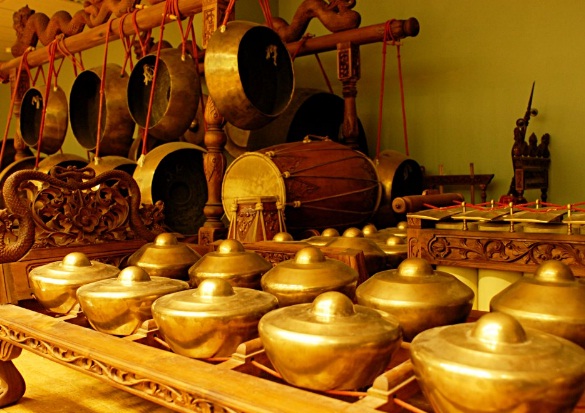
Gamelan music

Java knows a stunning number of traditional forms of music. The most known of them is gamelan music. The gamelan (gamel means play) is an extended ensemble of percussion instruments with bronze keys, together with some drums, flutes and other instruments. The music which it produces is miraculous, 'Pure and mysterious like the shine of the moon and is variable as flowing water', like the musicologist prof. dr. J. Huizinga once said.


Saturday, March 24, 2012

Bromo Tengger Semeru, National park

Bromo Tengger Semeru National Park is located in East Java, Indonesia, to the east of Malang and to the southeast of Surabaya, the capital of East Java. It is the only conservation area in Indonesia that has a sand sea, the Tengger Sand Sea (Laut Pasir Tengger), across which is the caldera of an ancient volcano (Tengger) from which four new volcanic cones have emerged.


This unique feature covers a total area of 5,250 hectares at an altitude of about 2,100 m. The massif also contains the highest mountain in Java, Mount Semeru (3,676 m), four lakes and 50 rivers. The Tengger Sand Sea has been protected since 1919. The Bromo Tengger Semeru National Park was declared a national park in 1982.
The volcanic complex of Tengger forms a condition where a new caldera of volcano forms inside a larger and more ancient caldera. There are five volcanoes inside the Tengger Caldera: Mount Bromo (2,392 m), Mount Batok (2,470 m), Mount Kursi (2,581 m), Mount Watangan (2,661 m), and Mount Widodaren (2,650 m). Mount Batok is the only peak that is no longer active, and is covered in casuarina (Indonesian: cemara) trees. Mount Widodaren, located beside Mount Batok, contains the cave Widodaren, which is considered sacred by local people.
The five volcanoes within the caldera are surrounded by a vast area of sand called the Tengger Sand Sea, which in turn is surrounded by a steep crater wall of the larger Tengger Caldera with height differences of about 200-600 meters. Other mountains around the Tengger caldera are: Mount Pananjakan (2,770 m) Mount Cemorolawang (2,227 m), Mount Lingker (2,278 m), Mount Pundak Lembu (2,635 m), Mount Jantur (2,705 m), Mount Ider-ider (2,527 m) and Mount Mungal (2,480 m). The peak of Mount Pananjakan is the most popular place to watch the entire volcanic complex of Tengger.
 
 
 Further south in the national park, there is another volcanic complex called the Semeru Group or Jambangan Group. This area contains the highest peak of Java, Mount Semeru (3,676 m). Other mountains within this area are Mount Lanang (2,313 m), Mount Ayek-ayek (2,819 m), Mount Pangonan Cilik (2,833 m), Mount Keduwung (2,334 m), Mount Jambangan (3,020 m), Mount Gentong (1,951 m), Mount Kepolo (3,035 m), and Mount Malang (2,401 m). The Semeru forest area has many rivers that are former lava lines from Mount Semeru. The Semeru group is considered to be very productive, producing volcanic matters such as lava, volcanic ash, and hot cloud and spreading it to the surrounding area. The lower area is surrounded with fertile rice fields.


Some endangered flora are protected in this park, such as Fagaceae, Moraceae, Sterculiaceae, Casuarina junghuhniana, Javanese Edelweiss, and about 200 species of endemic orchids. There is a relatively small diversity of fauna in the Bromo Tengger Semeru National Park. There are about 137 species of birds, 22 species of mammals and 4 species of reptiles protected in the national park. Examples are Besra, Green Peafowl, Javan Rusa, Dhole, Crab-eating Macaque, Marbled cat and Leopard.
Culture
 The area in and around the park is inhabited by the Tengger people,[2] one of the few significant Hindu communities remaining on the island of Java. The local religion is a remnant from the Majapahit era and therefore quite similar to that on Bali but with even more animist elements. The Tengger people are believed to be descendents of the Majapahit empire and were driven into the hills after mass arrival in the area of Muslim Madurese in the 19th century.
 
 
 On the fourteenth day of the Month Kasada, the inhabitants of Tengger Mountain range gather at the rim of Mount Bromo's active crater to present annual offerings of rice, fruit, vegetables, flowers, live stock and other local produce to the God of the Mountain, as adherents of religion combining elements of Hinduism and Mahayana Buddhism the Tenggerese ask for blessing from the supreme God, Sang Hyang Widi Wasa. This ceremony called Kesodo Ceremony.
Access
 Bromo Tengger Semeru can be reached by private and public vehicle. There are four gates to access the place, Probolinggo, Wonokitri, Ngadas and Lumajang. Probolinggo approach is the easiest and by fat the most popular route, especially if you go by public bus, Wonokitri is the closes and the easiest one if you go by private vehicle from Surabaya (5 hours journey). To get closer to Mt. Bromo you must rent 4x4 vehicles (there are many 4x4 vehicles rental there).
 There are a few options that you can choose to stay. You can stay at The Bromo Guest House which is located at Ngadisari that lies 3 km from the crater rim. Or you can choose other hotels at Cemoro Lawang because it this situated at the crater rim. Walking on the sea of sand and stepping up on the 249 steps to rim is worth to try. Enjoying the unique crater in crater, watching the dawn at Bromo is the main attractions in the area.

Tuesday, February 8, 2011

Selampit Delapan Dancing

Selampit Delapan Dance is a traditionaldance originating from the province of Jambi. This dance was first introducedby M. Ceylon when on duty at the Jambi Provincial Culture Department in the1970’s. Men born in Padang Sidempuan July 7, 1941 has exceptional talent in thearts, especially dance. As a good personal, friendly, and energetic makes himeasy to adapt to local culture and environment. More activities in the field ofculture struggling to make himself successfully captures the deepest messagesof the community association which is processed into a work of art calledSelampit Delapan Dance. In development, the dance was later determined to beone of the typical dances of Jambi Province. 

 Dance association was first playedby eight people using the wick stove as much as 8 rope tied to or hung in theattic. Ceylon dance named with the name “Selampit Delapan Dance” which refersto 8 straps that are used in the dance. Ceylon friend named O.K. Hendrik thensuggested to replace the wick stove with a scarf so that played dance lookedmore appealing. The proposal was approved by the Ceylon, so that in any eventstaging Dance Eight braid, scarf used as a medium of dance until now. 

By M. Ceylon, Dance braid was firstintroduced to glue the association relationship antarpemuda. Through the mediumof dance, the atmosphere of intimacy antarpemuda can be developed well. Everymovement in this dance describes the cohesiveness, and solidarity that is theguidance in daily life. In Selampit Delapan Dance contained a message about themeaning of an association, that association is based on good faith, mutualrespect, and behaved wisely. Surely this view is inseparable from thephilosophy of community life Jambi uphold the values of faith as a cornerstonein each interaction.

Selampit Delapan Dance lots shown onparty activities, like party and promotion of indigenous culture. At the partyactivities, dance is featured in the great days contained in the City and theProvince of Jambi, such as the conferment of degrees indigenous heritage, theAnniversary of Jambi, which fell in May, the Anniversary (HUT) in JambiProvince in January, and party Jambi community in commemorating the Anniversaryof Independence of the Republic of Indonesia (RI), which falls on August 17.Dancing With the braid Eight servings, activity is expected to be more festiveparty. On a large scale, this dance is displayed in cultural activities bothlocally and nationally outside Jambi Province. Dance is not uncommon even braidEight displayed as one of the media campaign Nusantara culture abroad. 

In Selampit Delapan Dance spectators canwatch the graceful movements that are served by the dancers. The dance openedwith a squat movement and play while you deliver to greet obeisance to theaudience as respect. This has become one characteristic of the Malay dances.The dancers perform the movement regards as a tribute to the audience of hiswillingness witnessed the dance offerings from start to finish. 

After delivering the greeting ofrespect, the dance continued with the core movement. Each dancer immediatelytakes the scarf that hung to further prepare for the core motion. They thenformed a circle before making a rotary motion. Slowly one by one from thedancers spin to knit a scarf, this movement is done in turns with gracefulmovements, so the scarf coalesce into a beautiful winding. After a nice blendwith the scarf, the dance movement followed by opening a knitted scarf. Hismovements were performed exactly like the early movements when making knitting.After the knitting is finished loading, then the position of the dancers backto form a circle formation scarf while playing with a regular motion andcarried to completion until the scarf back open as usual. 

Interesting dance movements increases withthe composition of colorful clothes and scarves are worn by dancers. Thedancers, amounting to 8 people (4 pairs) appear with the composition ofcolorful clothes, like blue, yellow, red, and pink scarf with a matching color.Assorted colors are beautiful looks combined with typical Malay Jambi wovensarong made of gold-embroidered silk used as a belt.

Eight dance braid can be found in thecity of Jambi, Jambi Province, Indonesia. Usually the dance featured in Jambicommunity cultural activities, such as cultural party, anniversary of the cityof Jambi, Jambi Province, as well as the Anniversary of RI. 

To get to the city of Jambi journey canbe reached by using public transportation (metro mini), taxi, or private car.If using public transportation (public transportation), the trip can be startedfrom the Sultan Taha Airport Syaifuddin proceed to Telanai Pura Jambi, Jambicity which also became the capital city of Jambi province with about 15 minutestravel time. 

Fortourists from outside the city who want to linger in the city of Jambi towitness the Dance of Eight braid, can stay at the hotel are numerous in thecity. In addition, along the road in the city of Jambi, there are manyrestaurants and restaurants serving variety of dishes typical of Jambi Malay.


Saturday, January 29, 2011

West Sumatera Dancing

  • It is a tradition in Minangkabau to welcome honorable guests or to open a traditional event by presenting "Sirih Leaves" in a special container called a "Carano". It symbolizes a request to allow the ceremony to take place and asks a blessing form the guest as the activities begin. It is performed in a special dance called " Tari Pasambahan" or "Welcome Dance".

Manggaro Dance 

  •  There is a unique way people in some villages chase away the birds so as to remove their weariness and boredom while in the rice fields. They make various movements and clik pieces of bamboo in their hands, while singing or shouting together. By the way they hope the birds will go away while the farmers are enjoying themselves. 

Urak Simpuah Dance 

  • There is a popular proverb in Minangkabau "Duduak bapamenan, tagak baparintang" which means that one should have something to do while sitting or standing. The movements of this dance show several activities done daily women at home. The basic movements are adopted form "Mulo pado" dance, which is a very old dance originating form Luhak Nan Tuo, the ancient name give to the area of Tanah datar regency, which is well known as the center of the old Minangkabau Kingdom. 

Tingkah Adoh Dance

  • Adok is kind of percussion instrument like tambourine though is bigger in size. It is commonly used to accompany Minangkabau folk song. In this dance the adok are rhythmically beaten by the dancers to accompany the dynamic movements of the dance. 
Plate Dance on Broken Glass 

  • This dance describes how farmers cultivate their wet rice-field or sawah beginning from digging the land, ploughing, planting , harvesting, taking the crop home, until pounding the rice. When the farmers get a successful crop, they will enjoy themselves in a cheerful festivity. Every body has the chance to demonstrate whatever special proficiency he or she has jumping and dancing on the glass fragments symbolically means that men who are honest have to bravely face all risks. Plates in Minangkabau symbolize property and the happiness of a home. 

Sewah Dance The movements

  • of this dance are based on the acts and movement of the traditional Minangkabau self-defence which is called "Pencak Silat". The dynamic music and movement of the dance reflects how optimistic and energetic the Minangkabau people are in facting the various challenges of life, especially when they are away from home. The used of Sewah or long knife is used in the dance.

Rambun Pamenan 

  • Rambun Pamenan is an old tale which is popular among Minangkabau people. Rambun Pamenan was a brave and honest young man who had once to fight for a beautiful girl. The girl's ring was stolen by some naughty boys when she and her sisters were playing together. As she could not go back home without her ring, her sisters had left her alone, while the naughty boys still played around her and teased her. Eventually, Rambun Pamenan appears and fight the boys. He wins the fight and gives back the girl's ring.

Pencak Silat 

  • Silat is the term for the arts of self-defence. The Silat of Minangkabau is very original, as all movements seen in nature, in accordance with the philosophy of Minangkabau " Alam Takambang jadi Guru " which means Nature is the Teacher. No movements are taken from other self-defence arts such as Kungfu, Karate,Taekwondo, and so on. Names are given to some movements of Minangkabau silat like " Kuciang Bagaluik " which means Cat Game and "Tangkok Harimau" or tiger catching etc.
Indang Dance

  • Indang or Rebana is the local name for a small tambourine. The use of Indang in the traditional dance of West Sumatra shows that there is an influence of Islamic culture on the original Minangkabau's culture. Islam culture was brought to Minangkabau, West Sumatra by merchants from Arabia and Persia simultaneously with the coming of Islamic teaching to this country in the 14th century. All the dancer commonly become absorbed in their dynamic movements while beating the Indang so as give rhythm to the movements and the song. They sing together along with dance. All the words of the song are usually about the history of the prophet Muhammad or advice according to Islam teaching. Now a days the also give general advice. 
Umbrella Dance

  • Bendi is the local name for two wheel horse drawn cart which can take 3 to 4 passengers. This old fashioned vehicle is very popular for short distance transportation on villages as well as in towns. It is a custom for a newly married couple to visit their close relatives or to go to picnic places for the pleasure for e few days the wedding. The use Bendi as the Have to Pass small paths in villages. This dance descry ibes a newly married couple and their companions go to Sunga Tanang a scenic place for a honeymoon, locates on the slopes of mount Merapi near Bukittinggi. The umbrella is a symbol of the protection given by the bridegroom to his new bride.
Selendang Dance

  • Selandang is kind of shawl. This dance is usually done by youngsters at a party or feast just for pleasure. Wearing a shawl, and Malay style dress does not mean that the dance is influenced by the Malay culture. It is an original Minangkabau dance for the Minangkabau tribe and it is said to originate from the Malay race. Also the music accompanying the dance resembles Malay music
Ragam Andalas Dance 

  • This is a combination of various dances from different parts of Sumatra which is also known as Andalas Island. It starts with a traditional dance from Aceh, and then goes to East Sumatra or Deli, Tapanuli, Riau, West Sumatra, Jambi, South Sumatra, and finally ends with dance from Lampung a province at the very tip of South Sumatra. The dance done by boys and girls in pairs is very energetic, and dynamic in nature.


Wednesday, January 26, 2011

Aceh

  • Banda Aceh- the provincial capital with a population now exceeding 200,000 inhabitants, divided into two main regions by the Sungai Krueng Aceh river. There really are tourist attractions and landmarks galore in Banda Aceh, such as the gleaming Mesjid Raya Baiturrahman (Baiturrahman Mosque), the remains of Gunongan, the Dutch cemetery of Kherkhof, the lively Pasar Aceh Central Market, various Tsunami landmarks, and the acclaimed Museum Negeri Banda Aceh. At night, the colourful Pasar Malam Rek food market is not to be missed and is based on the corner of the Jalan Khairil Anwar and the Jalan Ahman Yani. 
  • Banyak Islands - a group of around 100 mainly uninhabited islands, which sit roughly 30 km / 19 miles to the west of Singkil. Literally translated as the 'Many Islands', the Banyaks are around a four-hour boat trip from Singkil's port. Accommodation is available on just a few of the Banyak Islands, such as Balai, Palambak Kecil, Panjang, Rangit Besar and Ujung Batu.
  • Gayo Highlands - with stunning mountain panoramas and large areas of countryside and fields. The attractions within the Gayo Highlands all tend to be natural and include the Buffalo Caves (Loyang Koro) and the Simpang Balik hot spring, close to the town of Takengon. Blangkejeran is another notable town here and is well placed for guided tours of nearby local Sumatran villages. Gunung Leuser National Park - a diverse forest and world-famous national park. 
  • The Gunung Leuser National Park contains an immense array of Indonesian flora and fauna, including many endangered animals, such as elephants, orangutans, rhinos, tigers and more besides. Primates are more widespread in the park and it is quite likely that you will encounter the Thomas Leaf Monkey, which sports a crest and white front. The Alas Valley is where most tourists head, particularly to the village of Gurah, where outdoor attractions and countless different jungle trek packages are on offer.
  • Lampuuk / Lhok Nga - popular coastal destinations located on the westerly coast of Aceh, with glorious beaches and simple accommodation.
  • Pulau Simeulue - an isolated island lying approximately 150 km / 93 miles to the west of Tapaktuan, with dense rainforests and coconut plantations. The island of Pulau Simeulue is rarely frequented by tourists, although the surfing opportunities here are renowned, especially at the Baneng Beach Retreat.
  • Pulau Weh - an attractive island, with an interesting village and first-rate beaches, at Iboih and Gapang. Sabang is the main township of Pulau Weh and also serves as a port. Attractions around Sabang come in the form of the Pantai Kasih, the Pantai Paridiso and the Pantai Sumur Tiga beaches. 
  • Tapaktuan - a sleepy and relaxed seaside resort which is located around 200 km / 124 miles to the south of Meulaboh, where it is the principal town within South Aceh. The majority of sights to see in Tapaktuan reside along its coastal road of Jalan Merdeka. Outside of Tapaktuan, innumerable attractions offer themselves to tourists, such as the Kluet part of the Gunung Leuser National Park, the beaches of Pantai Air Dingin and Pantai Tui Lhok, the Dark Cave (Gua Kelam), and the port of Singkil, which is the departure point for the Banyak Islands and Pulau Simeulue.


Thursday, January 13, 2011

West Sumatera

  • Air Manis - a charming fishing village close to Padang and on the southerly side of the Sungai Batang Arau river. The nearby dark sandy beach is the top attraction that Air Manis has to offer.
  •  Bukittinggi - a market town surrounded by a very verdant volcanic landscape, with a scenic background comprising the mountains of Merapi, Sago and Singgalang. The tourist strip in Bukittinggi is based around the Jalan Ahmad Yani. Attractions in Bukittinggi include the Pasar Atas market, the Benteng Fort (Benteng de Kock), the Taman Bundo Kandung Zoo, the Japanese Caves (Gua Jepang), the Big Clock Tower (Jam Gadang) and the Taman Panorama, which has breathtaking vistas across the Sianok Canyon (Ngarai Sianok). Further sightseeing options around Bukittinggi are available and include the handicraft villages of Koto Gadang and Pandai Sikat, the Batang Palupuh Nature Reserve, the Lembah Anai Nature Reserve, the Gunung Merapi volcano, and the village of Silinduang, where the Rumah Gadang Pagaruyung (King's Palace)is to be found. 
  •  Danau Maninjau - an awesome and very photogenic lake, with jaw-dropping mountain scenery and endless vantage points.
  • Harau Valley - a tiny village encircled by green rice paddies and areas of jungle to the north-east of Payakumbuh. The Harau Valley is where the much-visited Lamba Harau waterfalls are to be found. Gibbons can often be heard howling in the neighbouring jungle.
  • Kerinci Valley - an area of extreme natural beauty, lying within the Bukit Barisan and alongside the westerly border of Jambi. Attractions in the Kerinci Valley include the tea plantations at the Kayo Aro Estate, the village of Kersik Tua, the town of Sungaipenuh, and also the vast Kirinci Seblat National Park, which is Sumatra's biggest and home to the Gunung Kerinci volcano, the lakes of Danau Gunung Tujuh and Danau Kerinci, and the Sengering Caves - including the Gua Tiangko.
  • Mentawai Islands - an island chain which had virtually no contact with the outside world until the 20th century and believed to have been separated from mainland Sumatra some 500,000 years ago. Siberut is the biggest of the Mentawai Islands and the most densely populated, and is now classed as a UNESCO biosphere reserve, with the westerly side of the island being dominated by the Siberut National Park. The Mentawai Islands is famed for both its exceptional surf breaks and also its sizeable primate population, including groups of rare black-and-yellow Siamang Kerdil monkeys. 
  • Padang - a large and modern city with a population of around 900,000 people, with good ongoing transportation connections to destinations such as Jakarta,Kuala Lumpur Malaysia and Singapore. Central Padang is relatively compact and easy to get around, with some interesting attractions based within its historical Old Quarter, along the Jalan Batang Arau. Close by and on the Jalan Diponegoro, look out for the Adityawarman Museum, and the Taman Budaya Cultural Centre, or take a stroll along the beachfront promenade and enjoy the views. Padang is also a good starting point for excursions to the Mentawai Islands and the Pantai Bungus beach.


Wednesday, January 5, 2011

Bengkulu

  • Bengkulu - the provincial capital, with a population of approximately 400,000 residents. The city of Bengkulu offers many coastal attractions, with its historical Benteng Marlborough fortress overlooking the Indian Ocean and being much photographed by tourists and day trippers, as well as the Bung Karno Mosque (Mesjid Jamik). Pantai Panjang is the main beach in Bengkulu, while for reminders of the strong British influences in the past, check out the Thomas Parr Monument and the Inggris Monument.
  •  Northern Bengkulu - offering a host of attractions along the coast road, the Jalan Manusurai Pantai, which heads in a northerly direction between Bengkulu and Padang. Towns of note within the Northern Bengkulu region include Curup, Ipuh, Lais and Mukomuko, while the Gunung Kaba volcano is also likely to be of interest and features two smouldering craters and is encompassed by a lush rainforest jungle.
  •  Pulau Enggano - an isolated island sited around 100 km / 62 miles from southerly Bengkulu, covering around 675 square kilometres / 260 square miles. Whilst facilities for tourists are relatively nonexistent, there are some gorgeous beaches with good snorkelling opportunities. The main harbour on Pulau Enggano is Malakoni.

Thursday, December 30, 2010

Riau

  • Dumai - a bustling port, with ferries regularly departing for Melaka (Malaysia) three times each day. From Dumai, ferries also travel to and from Pulau Batam, Pulau Bintan and Jakarta.
  • Natuna Islands - an isolated group of islands, which are quite tricky to actually reach. The Natuna Islands are most famous for their basket-weave cloth, as well as their displays of traditional dancing. Pulau Natuna Besar is one of the more interesting of the Natuna Islands. 
  • Pekanbaru - a busy, modern city, which has become the wealthy oil capital of Indonesia. Pekanbaru's population is now close to 800,000 people and facilities here are excellent, with banks, shops, restaurants and hotels lining the main thoroughfare of Jalan Sudirman. Also most tourists come to Pekanbaru for its good ferry connections with Singapore and there are a handful of notable attractions, such as the Malay exhibits at the Balai Adat Daerah Riau, the 18th-century Grand Mosque (Mesjid Raya), and the seasonal performances and events at the Riau Cultural Park. 
  • Riau Islands - spread across the South China Sea and numbering around 700 in total The Riau Islands tend to be regarded as quite separate to Sumatra, with both the islands of Pulau Batam and Pulau Bintan being so close to Singapore that they are almost suburbs. Other noteworthy islands within the Riau archipelago include those of Anambas, Karimun, Lingga, Natuna, Penuba, Singkep and also Tambelan


Wednesday, December 22, 2010

Bandar Lampung

  • Bandar Lampung- enjoying an elevated setting and great views across Teluk Lampung. Bandar Lampung is the region's largest city, Sumatra's fourth biggest, and also serves as the administrative capital. Attractions in Bandar Lampung are in reasonable supply and tourists will find that the most visited include the Krakatau Monument and the Lampung Provincial Museum. 
  • Gunung Krakatau - known to many as Mount Krakatoa, this volcano is perhaps the most famous on the planet. The eruptions of theKrakatoa volcano have been well documented. Today, visitors can take a boat trip around the island and only imagine the spewing lava, clouds of ash, and the devastation that this volcano has been responsible for. Kalianda - a peaceful and charming small town, with good vistas of Teluk Lampung, which is situated around 30 km / 19 miles away and to the north. Just a short excursion from Kalianda is a selection of pristine beaches and characterful fishing villages.
  • Kalianda has now become a popular weekend break destination with Jakarta locals looking for an alternative to Bali. Also close to Kalianda is the Gunung Rajabasa volcano, Wartawan Beach and its hot springs, and the islands of Pulau Sebesi and Pulau Sebuku, both of which boast great swimming and snorkelling opportunities.
  • Way Kambas National Park - a vast reserve and one of Indonesia's oldest national parks, with groups of Sumatran elephants, small numbers of the endangered Sumatran rhinos and tigers. Visitors to the Way Kambas National Park are able to join safaris, where you are led through the tropical foliage on the back of a friendly elephant. Alternatively, you can take a canoe down the meandering Sungai Way Kana, passing various riverside attractions and guest houses along the way.


Thursday, December 16, 2010

Tips On Food Handling

  • Avoid cross contamination.  Wash your hands every time before coming into contact with food.  Wash hands/utensils after handling raw meat, fish, or poultry.  
  • Wash your hands often.  Use soap and water to wash, and paper towels or clean cloth towels to dry your hands.  Research has proven that frequent hand washing is the most effective way to prevent food-borne illnesses.
  • Keep perishable foods refrigerated or frozen until they are used.  Thaw frozen items in the refrigerator, under cold running water, or a microwave (as part of the continuing cooking process).  Marinate food in the refrigerator.
  • Make sure the temperature in your refrigerator is below 40 degrees F.  Keep a thermometer in the refrigerator and check it often.  Adjust the thermostat to a cooler setting if necessary.
  • Examine foods and all date labeling.  Buy foods with the longest period to the expiration date.  Don't buy food items if the packaging is damaged.  Throw away foods that don’t look and smell fresh.  A change in the odor or appearance of foods is often a sign of spoilage.  Throw away eggs with cracked shells.
  • Be sure cutting boards and knives are thoroughly scrubbed and washed with soapy water after each use.  These items can easily transfer disease-causing bacteria from raw meats and poultry to vegetables, fruit, or cooked meat.  Use different cutting boards for raw and ready-to-eat foods.
  • Don’t use marinades that have come into contact with raw meat or poultry as dips or for basting.  If you want to use the marinade for these purposes, boil it first or prepare a separate portion for that use.
  • Store raw meat, poultry, and fish in the meat drawer of your refrigerator or in tightly sealed plastic bags to prevent juices from leaking onto other foods.  Thaw frozen meats, fish and poultry in a pan on the lowest shelf so that juices won't drip on other foods.
  • Cover ready-to-eat foods in the fridge to protect them from cross-contamination by raw meats or unclean surfaces.
  • Use effective and protective plastics for freezing foods.
  • Use a meat thermometer to be sure meats are thoroughly cooked, especially ground meats from combined sources, like hamburger.  Beef, lamb and pork should reach an internal temperature of at least 160 degrees F.  Juices should run clear and there should be no sign of pink inside the meat.  Poultry should reach an internal temperature of 170 (breasts) to 180 (whole birds and thighs) degrees F.  The US Department of Agriculture (USDA) has a safe cooking temperature chart on their website. (exit DHS)
  • Cook all seafood.  Avoid eating raw fish, raw clams, oysters, and mussels.  The US Food and Drug Administration recommends cooking seafood to an internal temperature of 145 degrees F for 15 seconds.
  • Cook eggs until the whites are firm and the yolks begin to harden.  Don’t eat foods that contain raw eggs such as cookie dough, egg dressings, eggnog, or homemade mayonnaise.  Pasteurized egg products are available that can be used safely to prepare these foods.
  • Keep hot foods hot and cold foods cold until they are served.  To prevent illness hot foods should be held at 140 degrees F or higher and cold foods should be held at 40 degrees F or lower until they are served.
  • Cool foods rapidly before storage.  If you are preparing large quantities of food for later use, cool the food rapidly.  Some methods include: placing the container in an ice-water bath, dividing the food into several small containers before refrigerating, including ice as an ingredient, stirring with an ice wand, and providing greater air circulation around the product container.


Tuesday, December 7, 2010

House Keeping

Many harmful germs can survive for severalhours on kitchen surfaces.  Reduce your risk of illness by keeping cuttingboards, counter tops, utensils, dishcloths, and towels clean.  Don’t usesponges in the kitchen.  They tend to collect small food particles and aredifficult to clean.
Use a weak chlorine bleach solution (2teaspoons of bleach per quart of water) as a kitchen sanitizer.  You maywant to keep a supply of this solution in a spray bottle near the sink.
Tips on Housekeeping
  • Clean and disinfect bathroom toilet bowls and seat, sinks, counters and tubs at least weekly.
  • Disinfect cutting boards.  Clean cutting boards in hot, soapy water using a scrub brush to remove food particles and germs that are lodged in the tiny crevices and cuts.  Then spray the boards with a weak chlorine bleach solution, rinse, and allow them to air dry.
  • Keep sink disposals and dishwashers free of food debris.  Keep counters and table tops clean.  Clean counters and tabletops after they are used for food preparation.  A weak bleach solution can be used to sanitize these surfaces.
  • Start each cooking session with a clean dishcloth and towel.  Damp sponges and dishcloths can harbor millions of germs.  Avoid using sponges in the kitchen and launder dishcloths and towels frequently. 
  • Remove trash/rubbish each day to discourage insects and other pests from entering your home.
  • Use disposable paper towels to wipe up juices from raw meat, poultry, or fish.
  • Wipe up spills in the refrigerator immediately.


Friday, December 3, 2010

Docks ( Non-Forklift )

  • When stocking shelves by hand, position the materials to be shelved slightly in front of you, so you do not have to twist when lifting and stacking materials
  • Visually inspect for sharp objects or other hazards before reaching into containers such as garbage cans, boxes, bags or sinks
  • Remove or bend nails and staples from crates before unpacking the crates
  • When cutting shrink wrap with a blade, always cut away from you and your co-workers
  • Do not try to kick objects out of pathways; push or carry them out of the way
  • Do not let items overhang from shelves into walkways
  • Move slowly when approaching blind corners
  • Place heavier loads on the lower or middle shelves
  • Remove one object at a time from shelves
  • Place items on shelves so that they lie flat and do not wobble


Saturday, November 27, 2010

Hazardous Material

  • Follow the instructions on the label and in the corresponding Material Safety Data Sheet (MSDS) for each chemical product you will be using in your workplace
  • Use personal protective clothing or equipment such as neoprene gloves, rubber boots, shoe covers, rubber aprons, and protective eyewear, when using chemicals labeled "Flammable", "Corrosive", Caustic" or "Poisonous"
  • Always use your chemical goggles and the face shield when handling chemicals labeled "Corrosive" or "Caustic"
  • Do not use protective clothing or equipment that has split seams, pin holes, cuts, tears, or other visible signs of damage
  • Each time you use your gloves, wash them, before removing the gloves, using cold tap water and normal hand washing motion; always wash your hands after removing the gloves.
  • Only dispense a liquid labeled "Flammable" from its bulk container located in areas posted "Flammable Liquid Storage"
  • Before pouring, dispensing or transferring any liquid from a bulk container labeled "Flammable", observe the following safety procedure:
  1. Only use the red color-coded, plastic or metal containers for transferring the liquid.
  2.  Electrically ground and bond the containers as follows:
  • a) Attach the clip at one end of the grounding wire to the rim of the dispensing container and then attach the clip at the other end of the grounding wire to a ground source, such as a ground driven steel stake.
  • b) Attach the clip at one end of the bonding wire to the rim of the dispensing container and then attach the clip at the other end of the bonding wire to the rim of the receiving container.
  • c) You are now ready to dispense the liquid from the bulk container into the opened receiving container. Upon completion, replace the lid on the receiving container and remove the bonding wire.
  • Before using the chemical exhaust hood, flip the fan motor switch to the "On" position
  • Do not use chemicals from unlabeled containers or unmarked cylinders
  • Do not perform "hot work", such as welding, metal grinding or other spark producing operations, within 50 feet of containers labeled "Flammable" or "Combustible"
  • Do not drag containers labeled "Flammable"
  • Use the rubber cradle when transporting unpackaged, glass bottles of chemicals
  • Do not store chemical containers labeled "Oxidizer" with containers labeled "Corrosive" or "Caustic"


Friday, November 26, 2010

Hand Truck Operation

  • When loading hand trucks, keep your feet clear of the wheels
  • Do not exceed the manufacturer's load rated capacity; read the capacity plate on the hand truck if you are unsure
  • Place the load so that it will not slip, shift or fall; use the straps, if they are provided, to secure the load
  • For extremely bulky or pressurized items such as gas cylinders, strap or chain the items to the hand truck
  • Tip the load slightly forward so that the tongue of the hand truck goes under the load
  • Push the tongue of the hand truck all the way under the load that is to be moved
  • Keep the center of gravity of the load as low as possible by placing heavier objects below the lighter objects
  • Push the load so that the weight will be carried by the axle and not the handles
  • If your view is obstructed, ask a spotter to assist in guiding the load
  • Do not walk backward with the hand truck, unless going up stairs or ramps
  • When going down an incline, keep the hand truck in front of you so that it can be controlled at all times
  • Move hand trucks at a walking pace
  • Store hand trucks with the tongue under a pallet, shelf, or table


Monday, November 15, 2010

Cylinder

If a cylinder is damaged, in poor condition, leaking, or the contents areunknown, contact your cylinder vendor. Have the vendor return the damagedcylinder to the manufacturer.
  • Wear appropriate foot protection when engaged in moving or transporting cylinders.
  • Sturdy shoes are a minimum.
  • Steel toed shoes if required by your supervisor, instructor, or department.
  • Proper personal protective clothing and equipment shall be worn.
  • Always have an appropriate Material Safety Data Sheet (MSDS) available and be familiar with the health, flammability and reactivity hazards for the particular gas.


Friday, November 5, 2010

Fire Extinguiser Selection

Portable fireextinguishers can saves lives and property by putting out or containing fireswithin the capability of the extinguisher. However, they must be of the correcttype for the particular fire, and they must used correctly.

Selection of Fire Extinguishers
There are a number of types of portable fire extinguishers available inAustralia. Each type of extinguisher may be rated for one or more classes offire. In some cases, particular extinguishers are not only consideredineffective against certain classes of fire, they can be dangerous if used inthose circumstances.

The classes of fire are:

Class A
: Ordinary combustibles (Wood, Paper, Plastics)
Class B : Flammable and combustible liquids
Class C : Flammable gases
Class D : Combustible metals
Class E : Electrically energised equipment
Class F : Cooking oils and fats

Portable fire extinguishers are distinguishable by their labels and theircolouring. In 1997 the standard colours of some portable fire extinguisherswere changed. It is therefore likely that you may encounter two of the sametype of extinguisher with different colourings.

Wednesday, October 27, 2010

Slips, Trips & Falls

Falls are the major cause of householdinjuries. Most falls happen when someone slips on icy, wet, or slick surfaces;trips over a loose rug, toy, or other object; or stumbles on stairs.

Tips to reduce the risk of falls
  • Use rubber-backed rugs on hard floors.
  • Avoid very thick carpets and rugs with busy patterns, especially on stairs.
  • Replace loose, torn, or frayed rugs.
  • Replace wooden stairs and floors that are broken, warped, or rotted.
  • Install non-skid strips or mats and grab bars in the bathtub or shower.
  • Keep stairs and walkways clear of cords and clutter.
  • Be sure outdoors and indoors stairs and hallways are well lighted.
  • Install handrails on both sides of all staircases.
  • Before climbing a ladder, be sure it is in good shape and is stable. Never stand on the top two rungs of a ladder. Have a friend nearby in case you fall.
  • Repair broken or uneven concrete in walks and steps.
  • Keep sidewalks and steps clear of snow and ice in winter.
  • Spread sand or salt on icy spots.
Tips to protect young children from falls
  • Don’t let children jump on beds or other furniture.
  • Install rails on their beds to keep them from falling.
  • Don’t use infant walkers. These cause many serious injuries each year, especially on stairs.
  • Install safety gates at the top and bottom of all stairs if you have a toddler.
  • Install guards on upper floor windows.
  • Adjust electric garage doors so they reverse easily when they hit something.
  • Make sure everyone in your family wears a helmet when riding a bike.


Sunday, October 24, 2010

Suffocation, Strugling & Choking

Each year hundreds of people die afterchoking on food or other small items. Most deaths involve infants, toddlers,and the elderly.

Tips to prevent choking and suffocation
  • Learn how to use the Heimlich maneuver to remove something stuck in a person’s throat.
  • Keep small objects away from toddlers. Anything that is small enough to pass through a toilet paper tube is a choking hazard.
  • Place infants on their backs to sleep. Use a firm crib mattress and avoid soft bedding.Remove drawstrings from children’s clothing.
  • Don’t serve foods that are hard to chew. Toddlers and some older people have trouble chewing and swallowing foods. Cut fruits and vegetables, hot dogs, and other hard foods into bite-sized pieces.
  • Remove doors before throwing out old appliances.
  • Keep plastic bags away from children. A thin plastic bag can suffocate a child.
  • Keep empty balloons and balloon pieces away from small children.
Water Safety
  • Drowning is the sixth leading cause of accidental death.  From 1999 to 2003, 338 Wisconsin residents died as a result of drowning.  Many of these deaths could have been prevented. 
Tips on water safety
  • Learn CPR.  This easy-to-learn technique can save the life of someone who has stopped breathing.
  • Never place electrical radios, hairdryers, or fans near a sink, bathtub or pool.
Tips to protect young children from waterhazards
  • Never leave a child alone near water. Children love to play in water and can drown in a matter of seconds. Keep the toilet lids down and bathroom doors closed. Empty bathtubs and buckets right after use. If outdoors, store pails upside down so they won’t collect rain or snowmelt.
  • Teach children to swim and talk to them about water safety.
  • Surround pools and hot tubs with a 5-foot fence and install childproof, self-latching gate.
Firearm Safety
  • Every two hours a child is killed by a gun. Guns attract children, but they can kill instantly. Children and teens do not fully understand how dangerous guns can be.   Suicide is the second leading cause of death among Wisconsin’s teens. Many suicides are committed with handguns.
Gun owners have a responsibility to besure their guns and ammunition are stored safely.Tips for gun owners:
  • Always keep guns unloaded and locked up.
  • Store guns and ammunition in separate locked cabinets.
  • Keep the keys for gun cabinets hidden or with you at all times.
  • Take a gun safety course.
  • Talk to your children about gun safety.
  • Remove ammunition from guns before storing them.
  • Make sure each gun is fitted with a trigger lock.